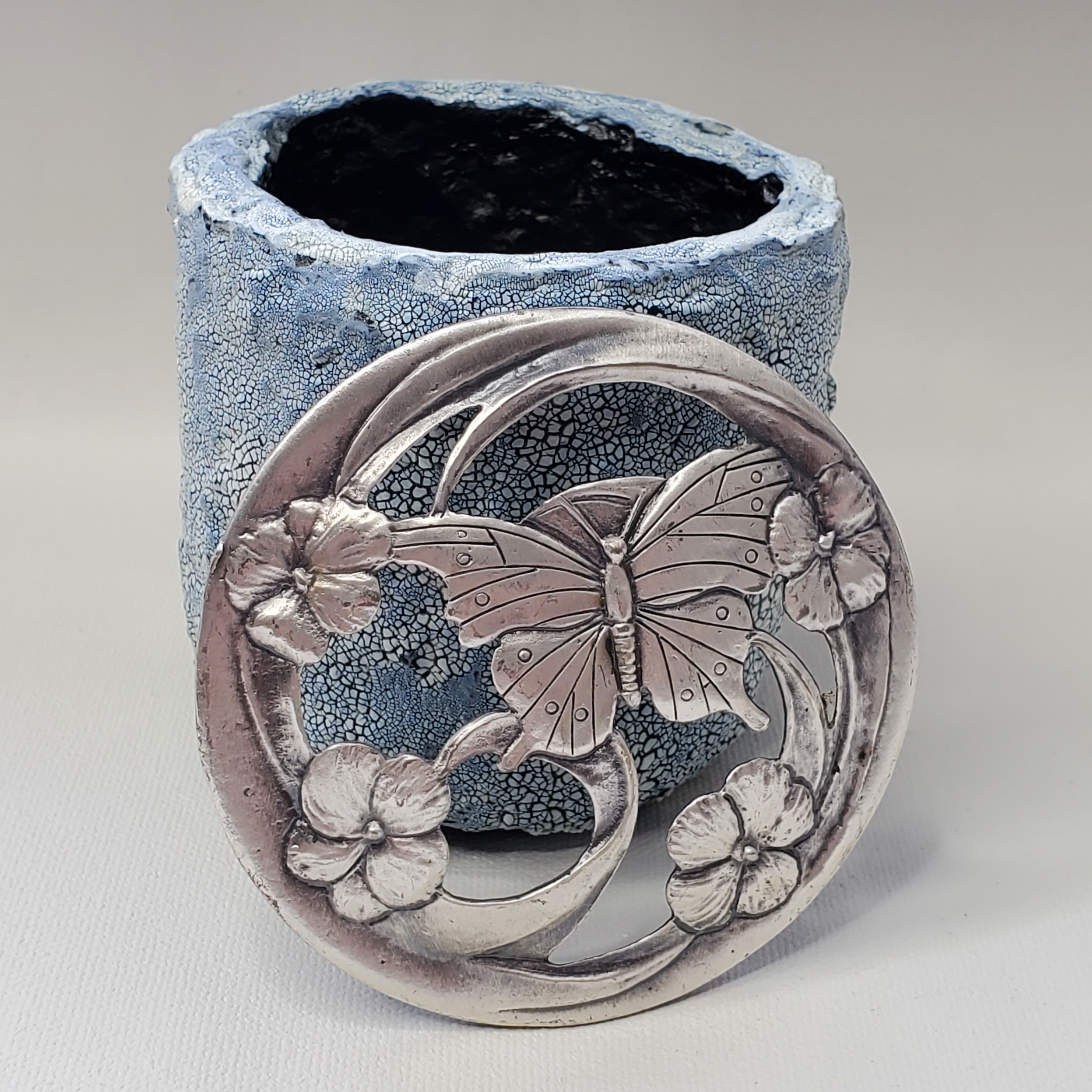
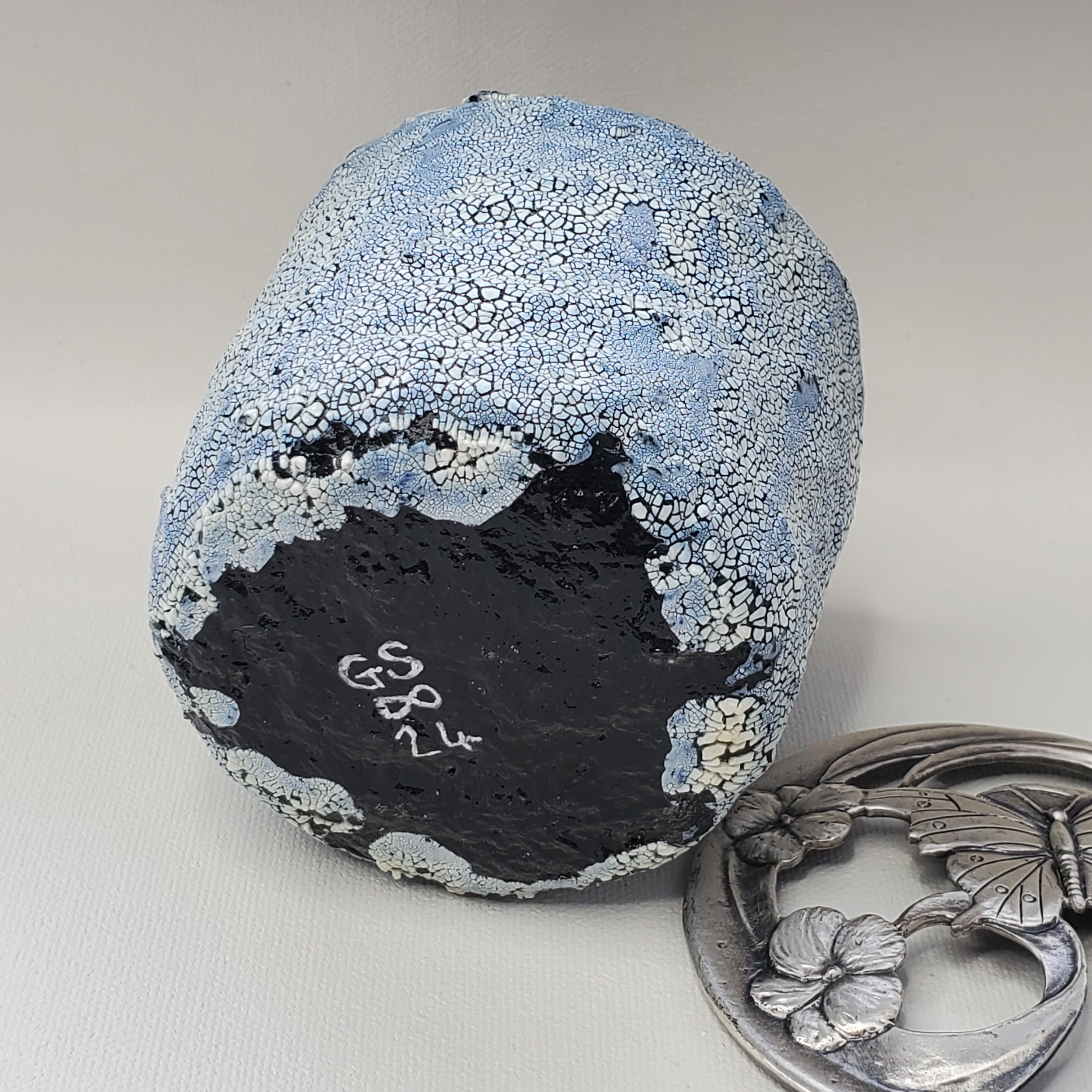
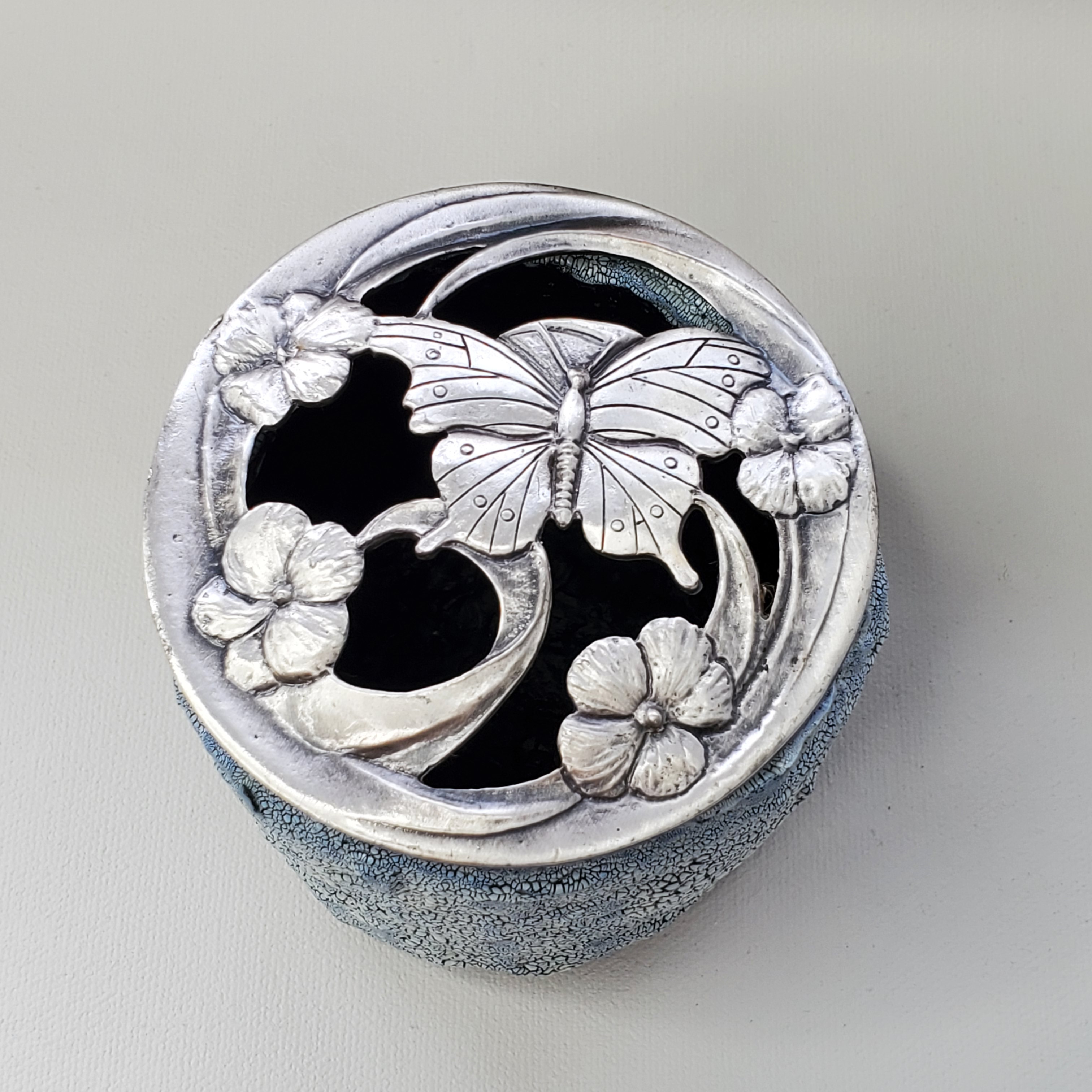
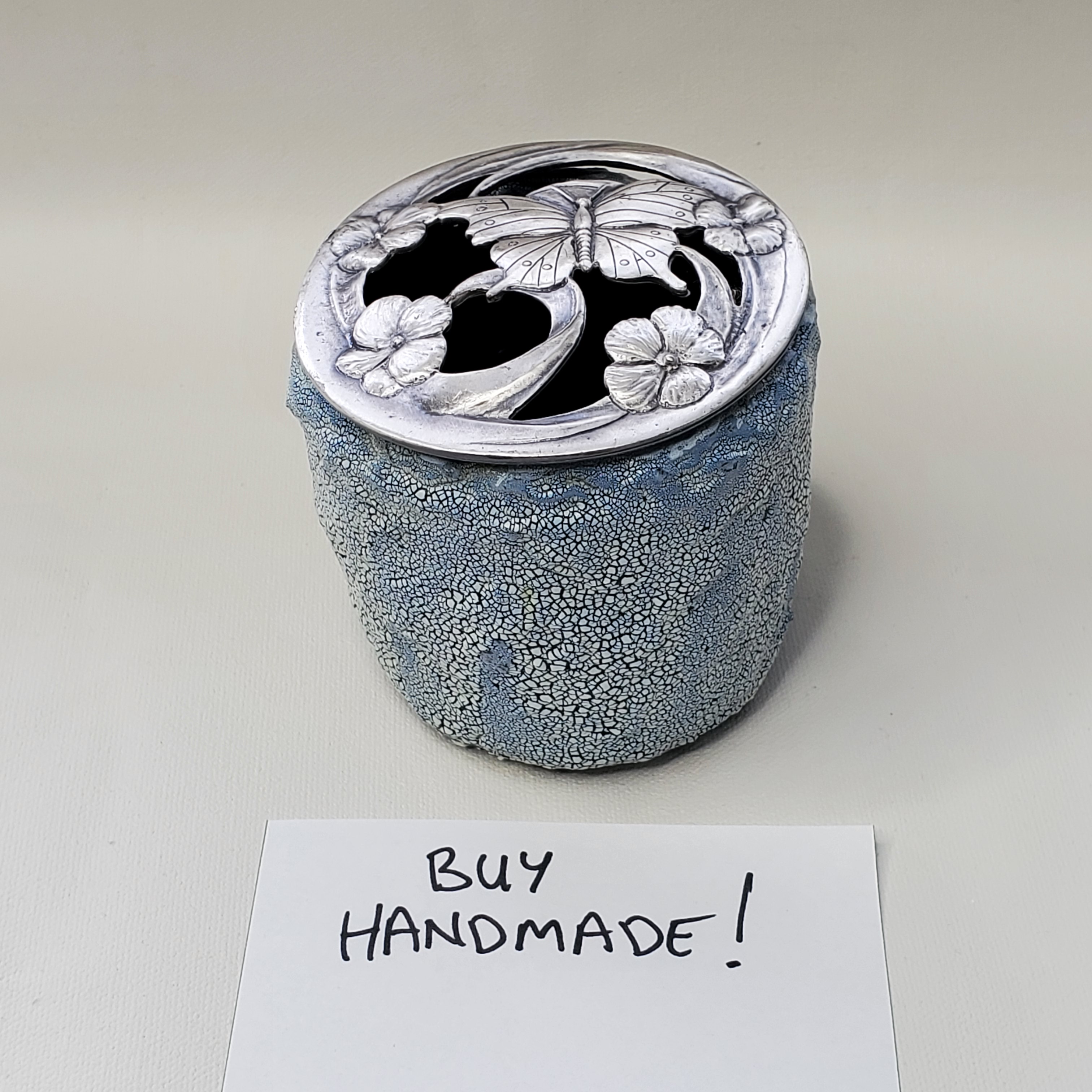
I finished this potpourri container recently and used a crackle finish on it as I did with my last jewellery dish. The pewter finish metal lid is something I purchased over 20 years ago and intended to use in a woodworking project of some kind but never did!
Available in my Etsy store – direct link here. Or, for 10% discount, purchase direct from me here by contacting me at gslinger@rogers.com.
From the Wiki entry:
Potpourri has been used in rooms since ancient times, in a variety of ways, including just scattering it on the floor. In early 17th-century France, fresh herbs and flowers were gathered—beginning in spring and continuing throughout the summer. The herbs were left for a day or two to become limp, then layered with coarse sea salt. The aging mixture was stirred occasionally as layers were added to it. Often the mixture would ferment or even mold as the summer went by. In fall, spices would be added to the unsightly grey mix until a pleasant fragrance was achieved. Then, scent preserving fixatives (see below) were added. The finished potpourri was set out in special pots with perforated lids to perfume rooms.
Much modern potpourri consists of any decoratively shaped dried plant material (not necessarily from scented plants) with strong natural and synthetic perfumes (and often colored dyes) added, with the scent often bearing no relation to the plant material used. Sometimes, items that do not originate from plants are mixed in with the potpourri, to give it bulk and to make it more aesthetically pleasing. It is possible to spray scents onto potpourri, however, a fixative is needed so that the scent is absorbed for slow release. Generally, orris root is used for this purpose.


 Third Dimension Jewellery with HandEye Originals